

Heinz Kohut
· General Information
· Lectures and Biographical Selections
· Audio Interview
General Information
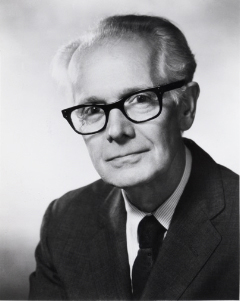
This section of Psychology of the Self Online is devoted to a brief study of Heinz Kohut’s life, personality, and ideas. Heinz Kohut, for those visitors unfamiliar with him, was the Vienna born, Chicago transplanted psychoanalyst who first conceptualized a psychology of the self. You will find as you travel deeper into this section that Kohut’s new psychoanalytic ideas were revolutionary. During the late 60s and early 70s, when Kohut produced his seminal work, psychoanalysis had become stalled in the development of its theories. This inertia was largely due to a worshipful attitude toward Sigmund Freud and the stifling blind adherence to his ideas that was prevalent in much of psychoanalysis. At that time, every new psychoanalytic idea, or extension of a previous idea, was held to the litmus test of whether it fit properly with Freud’s thinking. The analyst who submitted a truly new psychoanalytic idea, an idea that went beyond Freud’s conceptualizations, required enormous bravery and conviction since the price of such “hubris” usually was an informal extrusion from the psychoanalytic establishment.
The fullest appreciation of Kohut’s contribution requires an understanding of the prevailing psychoanalytic gestalt at the time Kohut wrote, for his contribution is twofold. Kohut gave us his valuable new ideas but, in addition, he also modeled a brave commitment to science through his ability to veer away from psychoanalytic dogma and take a fresh look at the phenomena that confronted him daily in his practice of psychoanalysis. Sadly, the price of his efforts was ostracization by the psychoanalytic establishment. In spite of this, Kohut, with the essential support of a small group of colleagues, continued his explorations until his untimely death in 1981 at the age of 67.
This section is meant to recognize the debt we owe Kohut. It is not meant to enshrine him. It also is meant: to make Kohut’s life understandable through Charles Strozier’s and Ernest Wolf’s biographical comments; to make his clinical thinking directly available through the chapters from the Tolpins’ edited version of the Chicago Institute Lectures; and to allow Kohut to speak for himself via recordings of interviews, seminars and delivered papers, most of which will be available for download at a modest fee.
Kohut’s thoughts about the scientist’s appropriate attitude seems to be the best way to set the tone for this section. In his 1977 book Restoration of the Self, Kohut notes that in all he had written on the psychology of the self, he had purposely not defined the self, knowing that some would be critical of him for that omission. He explained his omission in the following way:
“My investigation contains hundreds of pages dealing with the psychology of the self – yet it never assigns an inflexible meaning to the term self. But I admit this fact without contrition or shame. The self is, like all reality, not knowable in its essence. We can describe the various cohesive forms in which the self appears, can demonstrate the several constituents that make up the self. . .and explain their genesis and functions. We can do all that, but we still will not know the essence of the self as differentiated from its manifestations.
These statements. . .express my belief that the true scientist – the playful scientist as I put it before – is able to tolerate the shortcomings of his achievements – the tentativeness of his formulations, the incompleteness of his concepts. Indeed, he treasures them as the spur for further joyful excursions. . . . A worshipful attitude toward established explanatory systems. . .becomes confining in the history of science – as do, indeed, man’s analogous commitments in all of human history. Ideals are guides, not gods. If they become gods they stifle man’s playful creativeness: they impede the activities of the sector of the human spirit that points most meaningfully into the future.”
Lectures and Biographical Selections
· A brief biography by Charles Strozier, Author, Heinz Kohut: The Making of a Psychoanalyst.
· “Gentle into that Good Night”, the final chapter of Heinz Kohut: The Making of a Psychoanalyst, by Charles Strozier.
· Lecture, November 1974, Chapter 4 in Heinz Kohut: The Chicago Institute Lectures, edited by Marian Tolpin and Paul Tolpin.
· Lecture, January 1975, Chapter 5 in Heinz Kohut: The Chicago Institute Lectures, edited by Marian Tolpin and Paul Tolpin.
· “The Vienesse Chicagoan”, by Ernest Wolf, from Heinz Kohut and the Psychology of the Self, by Allen Siegel.
Audio Interview
· Interview, October 7, 1979 (MOV, 10.7 MB), Heinz Kohut interview given to Science Editor of Los Angeles Times.
This interview is approximately 30 minutes long. It may take several minutes or more to download, depending on your connection speed. For more information about the download process, see below.
Helpful hints:
In order to hear the interview, you will need a QuickTime Player; to download this program to your PC or Mac for free from the Apple website, click here. If you are prompted to enter registration number, ID, or password while downloading this program, you can leave these fields blank and click “next” to continue the download.